TECHNOLOGY HISTORY — based on documented sources
How the Web opened its doors
From a proposal in 1989 to opening the software in 1993: a small story about connections, told through CERN’s records.
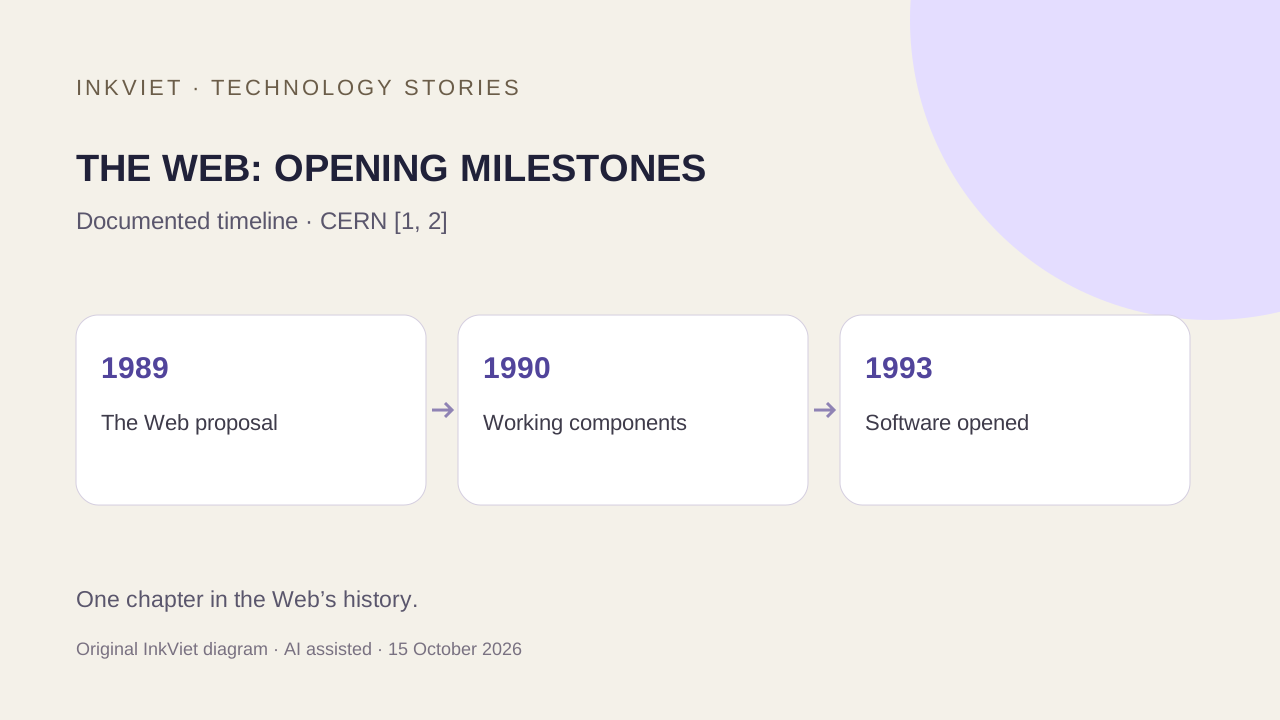
Original InkViet illustration, made with AI assistance. A diagram, not an archival photograph.
A link seems too small to be the main character. No engine roars into life. No dramatic control room lights up. There are simply a few underlined words. Click them, and a reader moves from one place to another.
Before that click became a habit, however, there was an ordinary problem: useful information lived on different computers, among different groups of people. CERN describes the Web’s original purpose as helping scientists share information. Tim Berners-Lee proposed it in 1989. This is the story of the Web, not a claim that one person invented the entire Internet. [1]
From a proposal to something people could use
CERN’s account of the Web’s 35th anniversary records a more formal proposal by Berners-Lee and Robert Cailliau in November 1990. By the end of that year, key components included HTML, HTTP and URLs, along with an early server, browser and editor. [2]
Those initials can look like a pile of technical detail. One way to understand their roles is to imagine three practical needs: content needs a form, computers need a way to exchange it, and each resource needs an address. This is our explanation of the components, rather than a quotation from Berners-Lee.
What interests me is the connection between the parts. A page on its own is still a page. Something changes when it can lead to another page without asking its reader to learn an entirely new way of reaching it.
When the software was opened
On 30 April 1993, CERN placed the World Wide Web software in the public domain. It later made a release available under an open licence. [1] This does not mean that everything published on the Web is free to reuse: subsequent articles, images and software have their own terms.
For someone building a product, the episode leaves a useful question: what happens when a tool becomes more valuable as more people can use it, but joining is unnecessarily difficult? That is an editorial question, not a historical verdict on every business model.
Today, we can open a document and send its link to someone far away. The click is still small. Behind it are the work of making different parts connect, and a decision that allowed other people to keep building.
Sources
- CERN — Where the web was born. Background, the 1989 milestone and the 1993 software release. Accessed 15 October 2026.
- CERN — World Wide Web at 35, 27 March 2024. The Berners-Lee–Cailliau proposal and the components implemented in 1990. Accessed 15 October 2026.
Both accounts come from CERN, an institution directly involved in these events. This article covers one part of the Web’s history; it is not a complete history of the Internet.