BIOGRAPHICAL PROFILE — based on documented sources
Jensen Huang: beyond the diner-table story
A short portrait of NVIDIA’s cofounders and the less visible work that comes after an idea is shared.
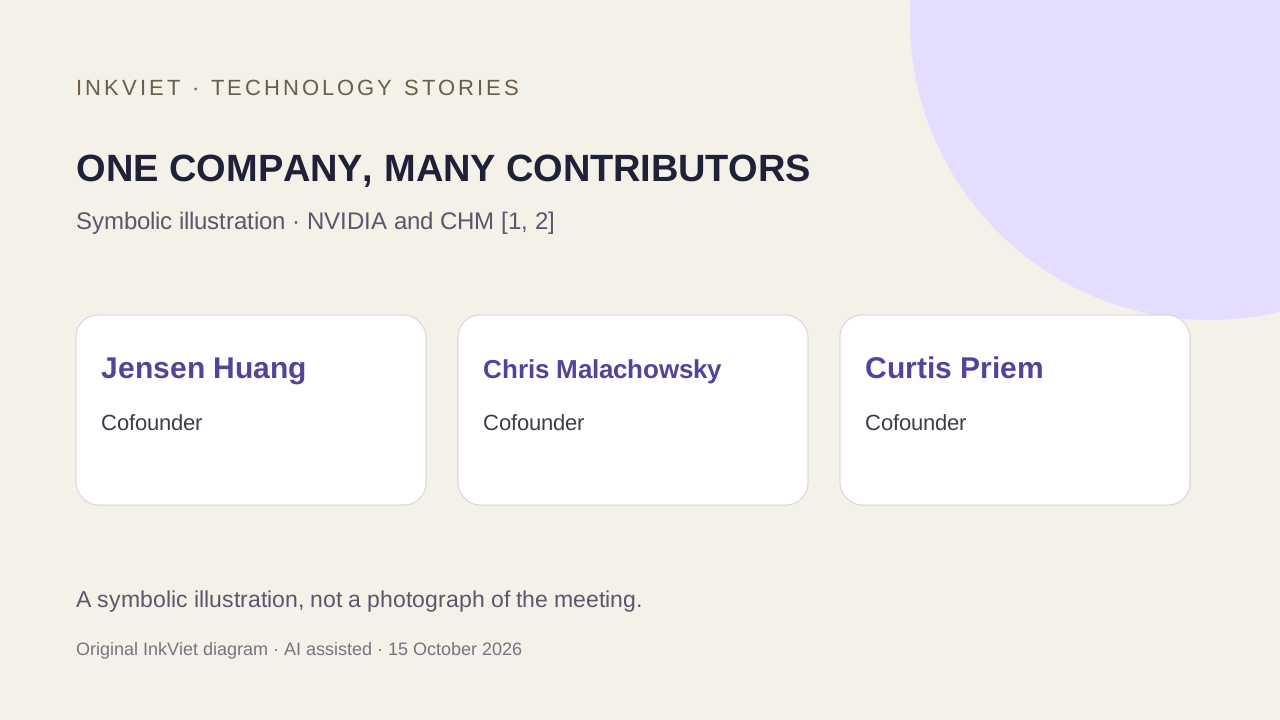
Original InkViet illustration, made with AI assistance. A symbolic diagram, not a photograph of the meeting.
The story of a technology company often begins with a place: a garage, a dorm room, a table in a diner. Those places are easier to remember than a computer architecture or a programming platform.
In a 2023 article, NVIDIA recounts how Jensen Huang, Chris Malachowsky and Curtis Priem met at Denny’s in 1993 to discuss a chip for realistic 3D graphics on personal computers. [1] The table makes a good beginning. Stop there, though, and a more interesting question disappears: what does a company have to do after its idea has been spoken aloud?
Make room for the people around the founder
The Computer History Museum’s profile also names the three cofounders and the year 1993. [2] So this article does not present NVIDIA as the work of one person who sat alone and foresaw the entire future of AI.
An entrepreneur’s story can become an inspirational formula when every later step is made to sound inevitable. The sources selected here do not establish what each person privately thought at every decision. That space is better left open than filled with a memorable line nobody can verify.
The cofounders’ names matter for another reason. A familiar founder can become a convenient shortcut for years of collective work. Keeping the names together does not tell us everything about that work, but it prevents the opening scene from swallowing the rest of the story.
After the product comes a platform
The museum describes NVIDIA’s development from graphics into accelerated computing. Its account includes the introduction of CUDA in 2006 and the use of GPUs for the AlexNet breakthrough in 2012. [2]
My reading is that making a product and enabling other people to build on it are different kinds of work. For a small product team, that suggests a practical question: do people merely use what we deliver, or can they combine it with the work they already do?
That connection is an editorial interpretation. It is not the only possible explanation of NVIDIA’s success, and the two sources do not establish a general recipe for building a successful company.
The diner table remains a good place to begin. Once we leave it, the story needs the people who worked together, the tools developed over time, and enough room to acknowledge what the available records cannot tell us.
Sources
- NVIDIA — Jensen Huang Returns to Denny’s, Brian Caulfield, 26 September 2023. The company’s account of the 1993 meeting; a corporate story, rather than independent evidence of success. Accessed 15 October 2026.
- Computer History Museum — Jensen Huang. Cofounders and technology milestones. This is an honorary profile, whose celebratory perspective should be considered. Accessed 15 October 2026.
This is a short portrait, not a complete biography. The illustration is original; no photographs from these sources have been reproduced.